
World of Warcraft: Forever does not launch until November 4, 2026, but some players are already running it. Using an open-source server fork built around the Forever beta client, hobbyists are hosting their own realms on home PCs and laptops. One player got a WoW Forever private server running on a MacBook and described the process on r/wowservers.
What WoW Forever is
Blizzard announced WoW Forever at BlizzCon 2026 on September 12. It is a third version of the game alongside modern WoW and Classic, with the level cap fixed at 60. Blizzard lists three new zones (Mount Hyjal, Zephras Isle and Riverglades), more than 1,000 new quests, nine new dungeons, two new raids and a new race, the Skyborne.
The official beta started on September 17 and runs through October 21. Beta access comes with the Skyborne Epic Pack and the Warcraft Forever Collection, so it is limited to players who bought one of those. That gate is part of why a self-hosted server is attractive to people who want to try the game before launch.
The TrinityCore fork behind it
Most of the activity centers on a fork of TrinityCore, the open-source server framework that has powered World of Warcraft emulation for years. According to the fork’s README, its “forever” branch runs TrinityCore master against the WoW Classic beta client, build 1.60.1.70338. It uses a vanilla world converted from VMaNGOS, plus the Skyborne and Zephras Isle content.
The README describes two routes. Windows players can download a prebuilt repack, extract it, run a setup script, start the servers from a Forever Launcher and press Play. People who want to let friends join their server can run a host-for-others script, and each guest runs a join script that trusts the host’s certificate and edits their hosts file. It’s unknown how much of the new content is actually playable.
One player’s MacBook setup
The r/wowservers post is the clearest public account of a non-Windows setup. The poster said they built the Forever fork from source as a native ARM64 Docker image and pulled map and collision data from Blizzard’s CDN because they did not have the client files. They then created a certificate authority, issued a certificate for trinity.actual.battle.net, trusted it, and pointed that domain at their own machine through the hosts file.
The client was the harder half. The poster first tried the Windows client through a patched CASC tool and a WINE setup. The client booted but rendered nothing. The macOS client from Battle.net worked, and the poster pointed it at the local server through the WTF config file.
The maintainer of the fork provides a patched Windows launcher, but the poster found nothing equivalent for macOS. They wrote a dynamic library of about 200 lines, loaded with DYLD_INSERT_LIBRARIES, that replaces the regional key in the client with the private server’s public key and keeps replacing it, because the client rewrites that value during login.
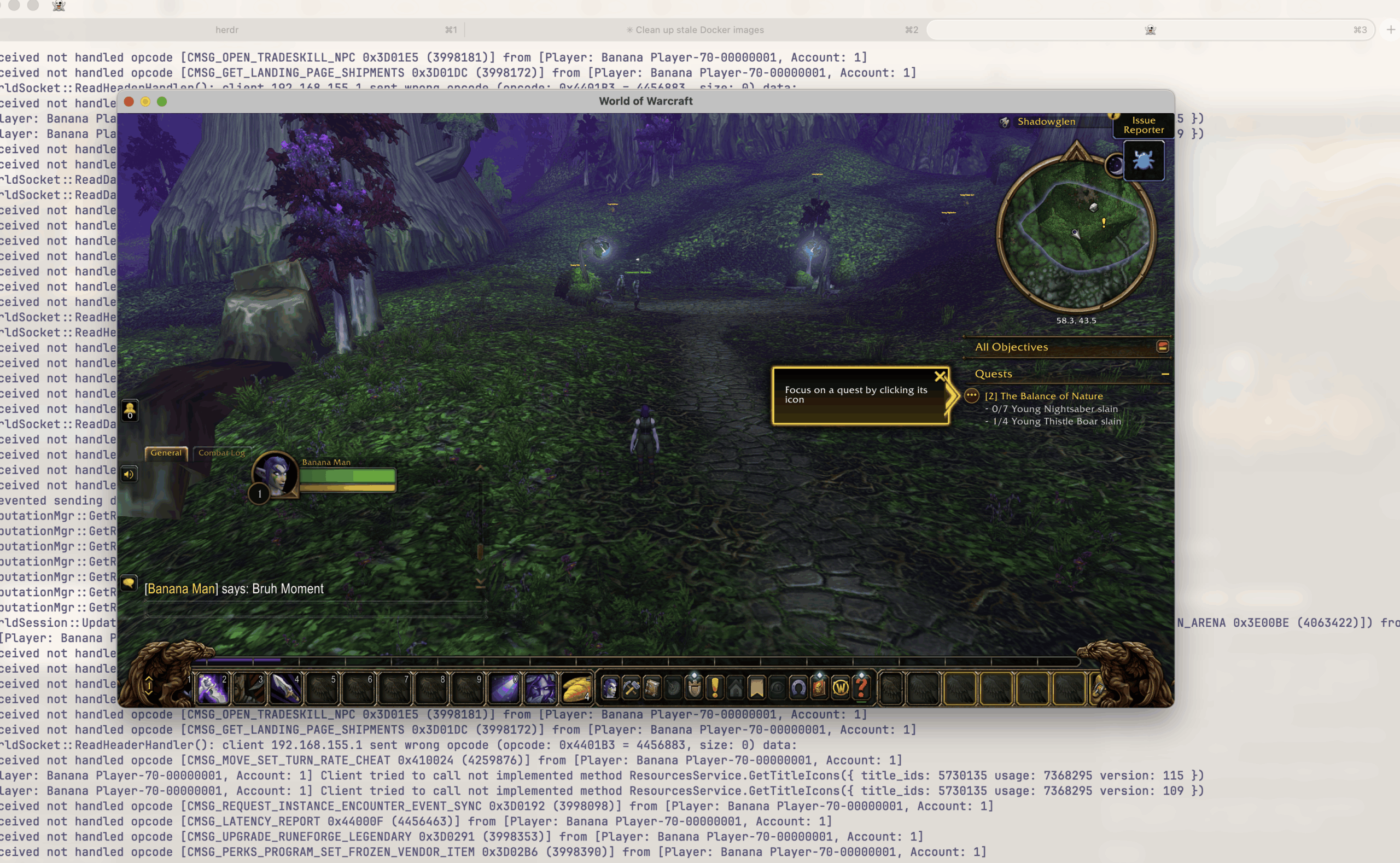
The poster also had to strip the client binary’s Hardened Runtime and sign it again. In their words, nothing cryptographic is broken: the client’s checks still run, and the client simply trusts a different key. As per they words – none of this involved decompilation or reverse engineering beyond what was needed to troubleshoot, and that a macOS path simply had not been documented.
The role of AI tools
The poster said openly that they used large language models, and argued that this did not mean sloppy code was being written. In their account, the models handled installation, configuration and reading logs, while the one piece of real engineering was the injection library.
A note the poster attributed to their AI assistant put the total at roughly 500 lines of C, Python and shell, with most of the effort going into diagnosis rather than writing code.
They also gave usage figures. According to their cc-usage report, they consumed 1.26 billion tokens over two days, which would have cost an estimated $392.15 at API rates. The poster said the WoW work was probably about 20 percent of that, and that a coding plan brought their actual cost to around $2 a day. These numbers come from the poster and have not been independently verified.
Why private servers keep appearing before official releases
Private servers have a long history with Blizzard. Nostalrius, a large vanilla WoW server, shut down in April 2016 after Blizzard sent a cease-and-desist letter. Blizzard announced WoW Classic at BlizzCon 2017 and launched it in 2019.
Running a server with Blizzard’s client and game data goes against Blizzard’s terms, and the company has acted against private servers before. Enforcement in the past has targeted large public realms.
A single laptop serving its owner is a different situation from a public server, but the setups described above still involve installing a custom certificate authority and modifying the game client, which carries its own security risk for the person doing it.
The WoW Forever beta ends on October 21, and the game launches on November 4.